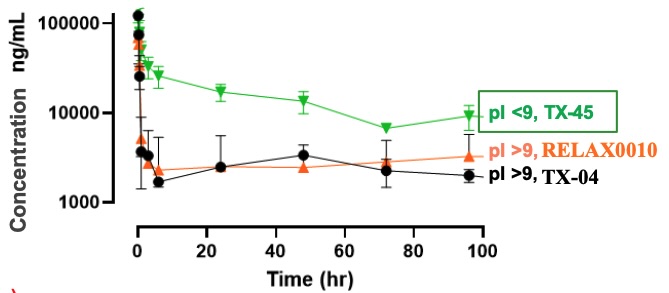
When you look up the drugs that fail due to lack efficacy in a Biotech company database such as this one, there are so many companies that fail because the drug was not efficacious – which means that it did not work as shown by the clinical trial. It is possible that the company is just trying different cancers or indications for their drug but according to us, a good clinical biomarker can help, but wonder if these companies realize it? It is a lot of resources in time and money that are wasted if the pharmaceutical fails on efficacy in the later stages. Interesting to note that it is a mix of big Pharma and small Biotech and since many of these “drugs” are antibodies they are not failing on toxicity as much.
Here are some failures in 2016/2017:
Acorda
Dalfampridine Post stroke deficits Phase 3 Phase 3 data released November 21, 2016 – failed to show efficacy, development to be discontinued.
Aquinox
AQX-1125 KINSHIP Atopic dermatitis (AD) Phase 2 Phase 2 failed to demonstrate efficacy November 2015
AstraZeneca PLC
Bydureon Type 2 Diabetes Phase 3 Phase 3 Cardiovascular Outcome trial data released September 14, 2017 – primary efficacy objective of a superior reduction in MACE missed statistical significance (p=0.061).
Cidara Therapeutics
CD101 Topical – RADIANT Vulvovaginal candidiasis (VVC) Phase 2 Phase 2 data released February 21, 2017 – efficacy not evident, Development to be discontinued.
Celgene
GED-0301 (CD-002) Crohn’s disease Phase 3 Phase 3 trial to discontinue due to lack of efficacy – noted October 19, 2017.
Endocyte
vintafolide Cancer – ovarian Phase 3 Trial stopped due to poor efficacy
Galena Biopharma
NeuVax (E75) – PRESENT Low-to-intermediate HER2+ breast cancer Phase 3 Phase 3 trial terminated due to poor efficacy.
Global Blood Therapeutics
GBT440 Hypoxemia in patients with idiopathic pulmonary fibrosis (IPF) who are on supplemental oxygen at rest Phase 2a Phase 2a discontinuation announced October 23, 2017 due to lack of efficacy.
Halozyme Therapeutics
FOLFIRINOX and PEGPH20 Pancreatic and gastric cancers Phase 1/2 Phase 1/2 enrollment closed due to lack of efficacy.
Immunomedics
Clivatuzumab tetraxetan Cancer – Pancreatic Phase 3 Phase 3 trial terminated due to poor efficacy
Incyte
Ruxolitinib Colorectal cancer Phase 2 Phase 2 trial stopped January 2016 due to lack of efficacy
Ruxolitinib – JANUS 1 and JANUS 2 Cancer – Pancreatic Phase 3 Phase 3 trial discontinued due to lack of efficacy
Merrimack
MM-302 HERMIONE Cancer – HER2-positive locally advanced or metastatic breast cancer Phase 2 Phase 2 trial discontinued December 21, 2016 due to poor efficacy.
Melinta
Solithromycin NASH Phase 2 Phase 2 interim data released September 30, 2016. Noted February 28, 2017 that development has been suspended due to lack of efficacy.
Momenta
Necuparanib (MOM-M402-103) Advanced metastatic pancreatic cancer Phase 1/2 Phase 2 development discontinued due to poor efficacy shown
Merck & Co
MK-8931 (017) – Verubecestat Mild-to-moderate Alzheimer’s Phase 3 Phase 3 trial stopped due to lack of efficacy – February 14, 2017.
Neothetics
LIPO-202 Reduction of localized fat deposits under the chin (submental fat) Phase 2 Phase 3 endpoints not met December 2015. Phase 2 trial initiated December 23, 2016 with data released June 26, 2017 – no efficacy shown
Novavax
RSV vaccine – Resolve trial Respiratory Syncytial Virus (RSV) in older adults Phase 3 Phase 3 released September 15, 2016 did not demonstrate efficacy.
Sierra Oncology
PNT2258 Relapsed or refractory diffuse large B-cell lymphoma (DLBCL) – cancer Phase 2 Discontinued following poor efficacy – June 2016
Synthetic Biologics Inc
Trimesta Relapsing-remitting MS in women Phase 2 License terminated following lack of efficacy shown February 2016
Verastem
VS-6063 Mesothelioma prior to surgery Phase 2 Phase 2 interim analysis showed lack of efficacy. Trial stopped. September 2015
XBiotech
Xilonix Colorectal cancer Phase 3 Phase 3 interim analysis announced June 9, 2017 – trial to be terminated due to lack of efficacy.