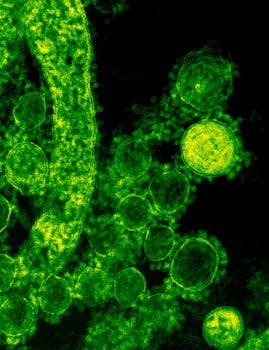
Adeno associated virus (AAV) has been one of major interests for gene therapy. AAV was discovered in 1965 as a contaminant of adeno virus and hence the name.
It is 22nm and low pathogenicity because no polymerase and cannot replicate till there is co-infector. Genome map is 4.7kb. 145 nucleotides inverted terminal repeats at both the ends. It does not have a polymerase and relies on cellular polymerase. It is 22nm and low pathogenicity because no polymerase and cannot replicate till there is co-infector. Two major gene loci REP (replication) and CAP (capsid genes). It has has low immunogenicity and when it infects the human cell, it integrates into specific region of chromosome called AAVS1 located on chromosome 19. This allows the virus to stay in the lysogenic/dormant state till the cell is infected by another virus such as EBV / adeno virus which provides supportive proteins from genes such as E1a, E1b55k, E2a, E4orf6, Virus associated genes
Almost all serotypes can infect any cell but it has tropism for specific cell types:
AAV1: Vascular endothelial cells, Retina
AAV2: Skeletal muscle, neurons, Vascular smooth muscle cellls, hepatocytes
AAV3: Vascular endothelial cells, Retina
AAV4: Heart, Kidney
AAV5: Astrocytes, Vascular endothelial cells
AAV6: Airway Epithelial cells, Heart, Liver
AAV7: Murine smooth muscle cells
AAV8: Hepatocytes
For the CNS: AAV1,2,4,5,8,9 have been used.
AAV is prefered for gene therapy since they have low immunogenicity, they persist in the host cell, and transgene remains episomal and odes not integrate. The process works by production of RNA by the promoter that is also introduced along with the gene. This RNA then produces a protein which can be functional. The tissue specific promoter may be Hemophilia A & B or LP1. They can remain in a non-dividing cell for upto 10 years though in a dividing cell, it may get diluted.