
|

Green caviar

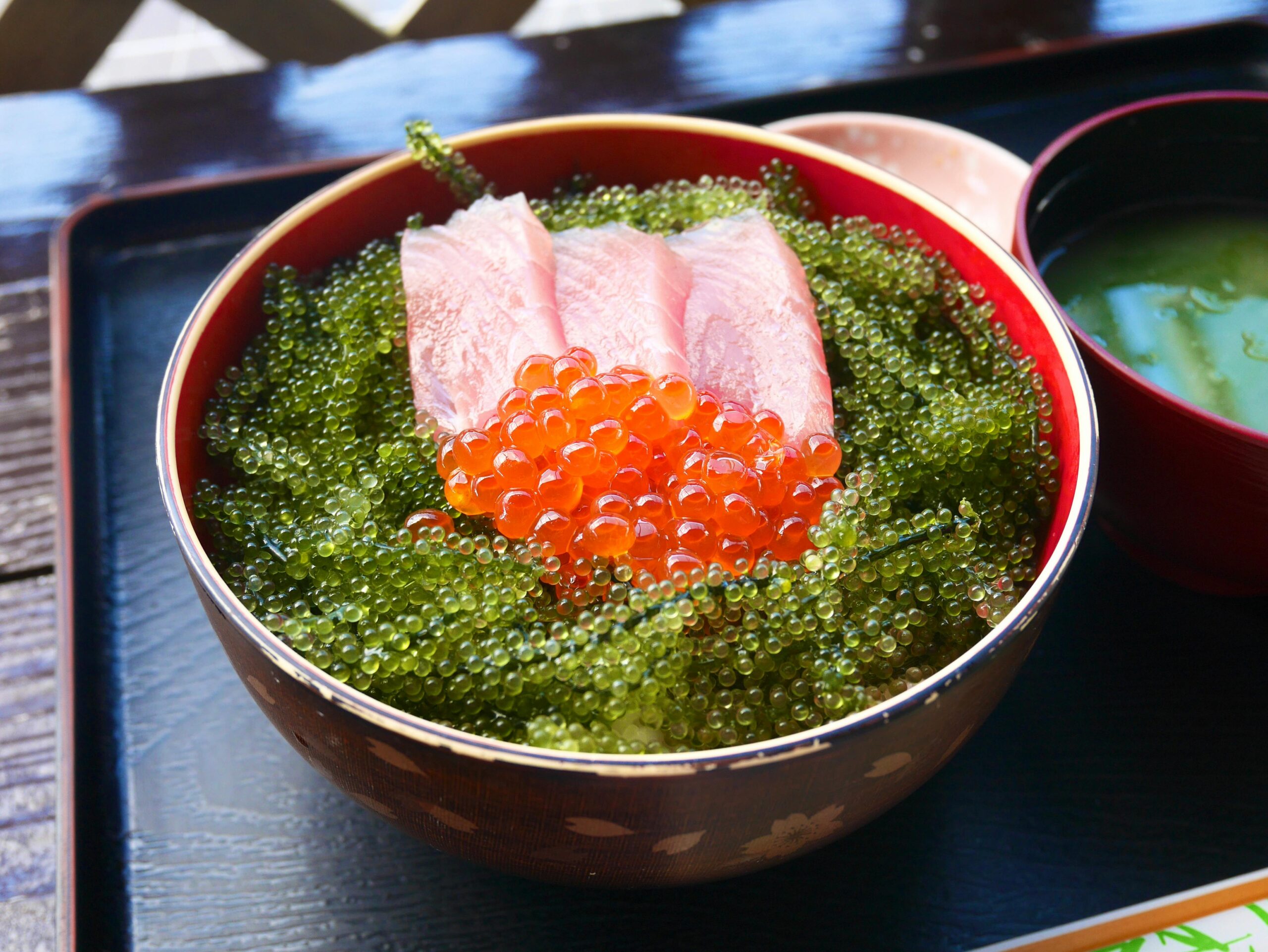
High angle of bowl with sashimi with red caviar and tobiko placed on wooden tray

Green caviar

Near Okinawa in japan, which in known for people who live longer than many other people a unique food is eaten. These are small orbs that look like grapes and are eaten raw. They are actually a species of seaweed. This is know as green caviar and is eaten on top of almost all foods and can pop in your mouth while eating.They call it umi-budo. Biologists have looked for what they contain and the compound that has come up consistently is called Fucoidan

Fucoidan:

There are many names for this sulfated alpha-L-fucan such as Fucoidin, Mekabu fucoidan. This is found in brown seaweed and the properties are remarkable. It has been shown to dramatically affect the human metabolism. It lowers inflammation, boosts immune system, reduce blood pressure and has many anti-tumor activities. More details are on Memorial Sloan Kettering website: https://www.mskcc.org/cancer-care/integrative-medicine/herbs/fucoidan


Similar Posts

  • Autism Gene Browser

    There are many foundations for rare disease and each try to accomplish development of drug’s for their rare disease. There are many steps involved in drug development and a critical feature is to make the science understandable and accessible so that scientists can understand the disease but also the possibility of coming up with a…

  • Synthetic biology

    The term is more complex than the function! Synthetic biology implies control of biological circuits through a control mechanism. Wikipedia calls it “redesign of existing biological systems for useful purposes”. This combines biology and engineering and the differentiator between yeast based beer making might be the control systems that are built in the system by…

  • Plant communication

    Plants communicate with each other. That much is known. However, what is not known is how plants communicate using symbiosis. Dr Johnson has reported new work in Ecology letters that shows that plants use symbiotic fungi to enable communication. Communication also causes interesting secretion by plants when infected by aphids. These secretions that are volatile…

  • |

    ALS and TDP43

    Almost 90% of ALS is thought to be sporadic. The reasons are not well understood and thought to be oxidative stress, damaged endoplasmic reticulum, mitochondria, cytoskeleton or misregulation of RNA pathways. One protein implicated is TDP43 which sits as a junction of ALS pathogenic path by binding to RNA modulation synthesis, splicing, stability and transport….