Fluorescent living cell produces laser

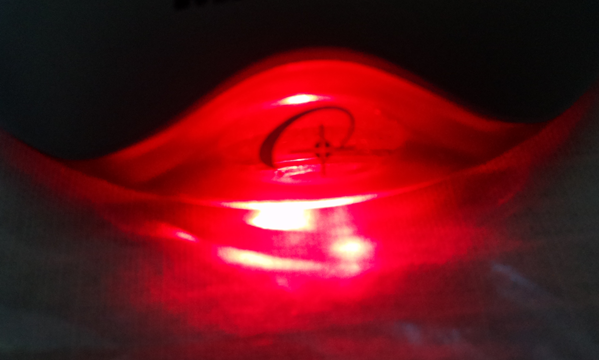
Harvard Wellman Center for Photo medicine’s two scientists, Gather and Yun, have shown that they can generate laser light from single cells. These HEK293 cells were transiently transfected with GFP. The expressed GFP (~300 microMolar) showed optical amplification of light. The cells had to placed in an artificial cavity and stimulated by external pulsed laser but the intensity of the laser emitted was bright enough to photograph. Interestingly the cells are viable after the experiment. This got a lot of publicity from many sources. However, their in-vivo microscopy also deserves more attention.

Check the video’s and the laser cell setup on the Yun lab website.

http://www.intelon.org/index_files/Research.htm

The mission quoted from the Yun lab website “Yun Lab focuses on developing new optical technologies and applying them to solve biological questions and medical problems. To realize this goal, we integrate our expertise in physics, photonics, and various engineering disciplines with biomedical needs and curiosities. Our research activities therefore include multidisciplinary collaboration particularly with biologists and clinicians. Also we jointly pursue collaboration with industrial partners to enhance the practical impacts of research. “

Similar Posts

  • |

    Obesity facts

    Just some highlights to remember 50% of world population is thought to be obesity and thought to be a master switch for a variety of disorders such as diabetes, cardiovascular disease, liver disease and kidney. 30-40% of Diabetics develop chronic kidney diseases and presence of albuminuria raises risk. 38% of adults have MASH with very…

  • Grunost

    Grunost is a type of cheese that is sweet and often typical of Norways’ cheese culture. It is incidentally not a cheese at all since it is made from the process of making cheese that leaves whey as a by product. This whey is boiled with milk or cream to make a brown caramelized cheese….

  • Spider robot molded cheaply

    Cheap robots by the millions Typically it costs many hundreds of dollars to make a robot that can do something substantial. However, researchers at the Fraunhofer institute have created molded or stamped robots that can be created very cheaply – they imagine them to be like disposable gloves. Make them, use them and then throw…

  • |

    ALS and TDP43

    Almost 90% of ALS is thought to be sporadic. The reasons are not well understood and thought to be oxidative stress, damaged endoplasmic reticulum, mitochondria, cytoskeleton or misregulation of RNA pathways. One protein implicated is TDP43 which sits as a junction of ALS pathogenic path by binding to RNA modulation synthesis, splicing, stability and transport….

  • |

    Reinforcement learning

    Reinforcement learning is a method that drives learning and memory in primitive species such as birds, humans and other living species to its use in machine learning. It is used to influence the behavior of us humans on social media to its use to train machines. The essential components were initiated by BF Skinner 20th…