Protein function alters taste

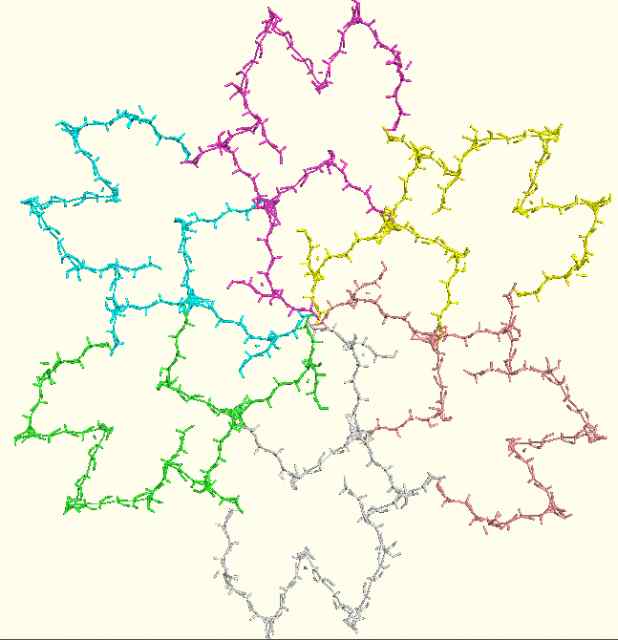
There have been many instances where we believe what we see or taste or hear. That belief forms our existence on what is “real”. Sometimes, when that distorts, it can change our perception. This is not about psychedelic substances but in fact a small protein called miraculin. It is 24.6 kDa protein that is a dimer or tetramer. This is found in a berry plant called “Synsepalum dulcificum” or Miracle fruit. They taste like cranberries but they can alter the taste of sour to taste like sweet. Miraculin binds to sweet receptor and acts as an antagonist but at low pH it changes to become a sweet receptor agonist. So while it is bound on the receptor almost everything acidic would taste sweet.

This could be used to make soda’s that taste sweet for diabetics or give them a taste of sweet without sugar.

So if you want to make lemonade when life gives you lemons try “flavor-tripping” or perhaps enjoy cheese as cheese-cake.

This protein has been cloned into lettuce and tomato, so imagine eating differently tasting vegetables and increasing the salad repertoire.

If our receptors can be fooled by a small protein, wondering what other receptors in our gastrointestinal system also change our perception and digestion?

See the protein here: https://www.rcsb.org/structure/3IIR

Similar Posts

  • | |

    Sleep apnea

    Sleep apnea is when sufferer stops breathing (apnea) at night as the muscles in the throat relax and then resumes when brain semi-awakes when the oxygen supply gets low to restore respiration. This happens tens to hundreds of times at night and can be debilitating when the disruption to sleep causes other health effects such…

  • Vitamin K2

    It has been traditionally thought that for bone health, sufficient calcium is required. However, it is just not calcium. A vitamin called Vitamin K1 (phylloquinone) and K2 (menaquinone) in combination with Vitamin D2 and calcium is important for activating a protein called osteocalcin which binds to calcium to build bones. Osteocalcin is also involved in…

  • |

    Alzhiemer’s psychosis

    Alzheimer’s psychosis is distinct from the slow progression of Alzheimer’s and indicates a more severe phenotype in which cognitive decline starts even before psychosis onset. It is thought to originate/localized in neocortex rather than medial temporal lobe. There is currently only one drug that targets Alzheimer’s psychosis. It is called Rexulti (Brexipipazole). It is specifically…

  • Games can help science – Foldit

    People spend a significant amount of time playing games and solving puzzles. It has always been argued that there must be some benefit that could be derived from the endeavors. Many man-hours, computer computation and power go into playing games. Obviously, they serve some physiological and psychological functions since so many people continue playing games….

  • Spider robot molded cheaply

    Cheap robots by the millions Typically it costs many hundreds of dollars to make a robot that can do something substantial. However, researchers at the Fraunhofer institute have created molded or stamped robots that can be created very cheaply – they imagine them to be like disposable gloves. Make them, use them and then throw…

  • |

    Bile duct cancer

    Bile duct cancer or cholangiocarcinoma, (CCA) is a rare cancer with an incidence of ~3 cases per 100,000 with 10,000 new case diagnosed annually. It is about 10-20% of liver cancers. Interestingly, in Thailand, and some south east asian countries, the incidence is nearly 10 fold higher due to liver fluke infections (Opisthorchis viverrini and…