
LoRa in AI image generators

This stands for Low Rank adaptation. In AI terms, this is a small add-on to the model that makes it do specific things. It is usually used in the context of stable diffusion. A large model takes very long to train with significant resources. However, sometimes, you need specific details – for example you could have a model that needs to do better image generation of the hands, in which case you train a small subset with hands and that is the LoRa that will be used specifically for hands. Remember, LoRa does not do the full model but just freezes weights and parameters. Then it adds matrices which are applied to new inputs to get specific results in the context that is needed.

LoRa is used sometimes to create images in a specific style.


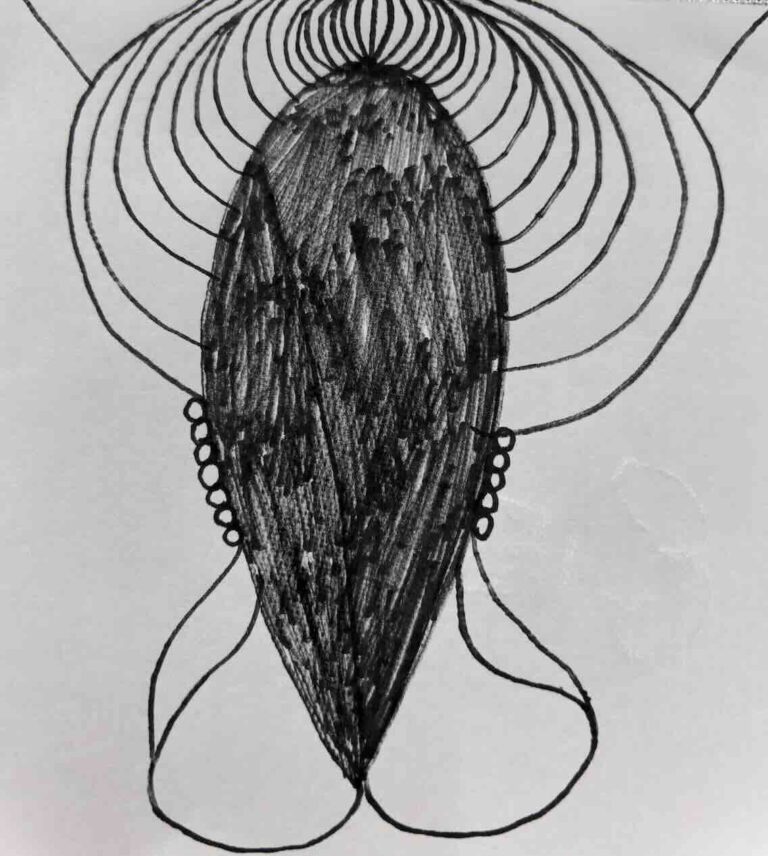
In the picture above that image was generated with an image generator in the drawing style. Whereas in the fantasy or other styles it looks very different with the same prompt.


Similar Posts

  • Observability

    Observability is important for AI and AI tools. It is the ability to monitor them for token usage, response quality and model drift. Typically, an AI system is monitored through logs, traces and metrics but an AI system on AI agent may need other metrics. Troubleshooting a complex AI system that produces its output probabilistically…

  • |

    Virtual cell

    Hani Goodrazi – Arc institute has been working on virtual cell. Drugs fail due to overfit experimental models, You need screen drugs with better models of human biology. Geneva is platfrom that brings tumor models into perturbation model – that is a transcriptomics assay that deconvolves into effect. Take multiple cell line and then treat…

  • Sparql tool – connect LLM to knowledge graphs

    Talk to knowledge graph – sparql-tool Use LLM.: Hallucinations (sometimes good for creativity), Outdated knowledge, no access to your data ( trained on public knowledge). Solutions: Fine tuning – retrain the model on domain data RAG – Search: look things up in real time. Claude code looks at searched doc. Vector embeddings: semantic similarity search…

  • |

    Knowledge graphs

    Knowledge graph is a way of representing information where entities/nodes (people, places, products, concepts) are linked by relationships/edges (works, creates, has ). It is a semantic network that captures facts and context. There is also an ontology that defines different types of node/edges and defines what types exist and how they relate. These are used…