This was at Google’s offices in Cambridge, MA learning GCP and Google cloud framework while using AI tools for drug discovery.
Thank you to the team members at Google, for helping me understand how to set up an AI workflow and discover drugs by targeting EGFR (Epidermal Growth Factor Receptor) kinase domain. This example is for Non-Small Cell Lung Cancer (NSCLC), where the EGFR kinase domain is a primary target in NSCLC. Drugs such as Erlotinib and Gefitinib target this domain.
We created potential new drugs for NSCLC by:
- Creating a cluster on Google Cloud from scratch,
- Assigning GPU resources, (and many other steps such as load-balancing)
- Predicting the structure based on sequence,
- Running an application that enabled docking of marketed drugs on the EGFR protein and finding other docking sites
- Conducting a virtual screen to find new small molecules that show activity for EGFR,
- Resistance analysis to see if known mutations (T72M, C86S, L49R, G24S) at the binding site will hamper the activity of the drug.
By the end we had a functional web dashboard that:
- Analyzes protein drug targets using ESM-2 (650 million parameters)
- Predicts 3D protein structures using ESMFold
- Detects drug binding pockets using geometric analysis
- Screens drug candidates using DiffDock NIM (NVIDIA hosted API) and RDKit
- Generates novel drug molecules using GenMol NIM (self-hosted on GKE)
- Predicts drug resistance mutations using ESM-2 masked language modeling
- Explains results with Gemini AI voice narration
The pipeline covers four real disease targets:
- Non-Small Cell Lung Cancer (EGFR)
- HIV/AIDS
- Alzheimer’s Disease (BACE1)
- Cancer Cell Cycle Dysregulation (CDK2)
We used various tools from Google, NVIDIA and open source models and frameworks.

EGFR sequence is known:

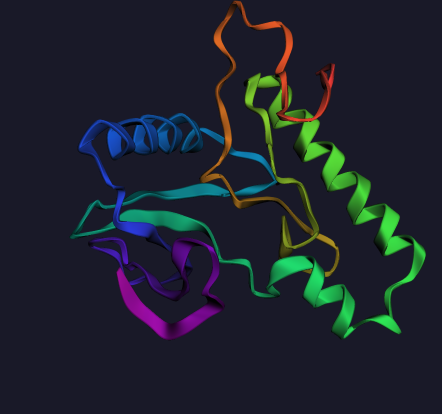
From sequence, the structure can be predicted

Next step is to find the possible binding sites at multiple (5) pockets that were selected

Then docking a library and taking 5 poses

Which led to a list of 10 new compounds.


Finally, the resistance mutation analysis:

Each of these steps/tools can be optimized, changed, and modified – this was just a trial to see how quickly a scientist can iterate through several molecules. This is not a final list, and binding energy is not everything; however, this was not the purpose.
The purpose was to get a scientist like me to use AI tools to discover new drugs and test the ability to perform these experiments on a GPU while measuring their speed of new molecule iteration. These simulations are fast! Caution: These are only experiments with AI technology that provides an instrument. Much more significant work will be needed, with many more studies, before we find a drug suitable for a new clinical trial.
This 2-hour experiment shows that we can discover drugs by iterating much faster than before and potentially explore new chemical space through the use of AI.
NOTES:
Understanding the AI Models
ESM-2 (Evolutionary Scale Modeling 2)
ESM-2 is a protein language model from Meta AI with 650 million parameters. Trained on millions of protein sequences, it understands the “grammar” of proteins by identifying which amino acid combinations are natural or unusual.
In this pipeline, it performs two primary roles:
- Protein Sequence Embeddings: It generates rich numerical representations of sequences for downstream analysis.
- Mutation Prediction: It predicts mutation effects using masked language modeling, similar to how BERT predicts masked words in natural language.
ESMFold
ESMFold is a structure prediction model that takes a protein sequence and predicts its 3D atomic coordinates.
Key features include:
- High-Speed Prediction: Unlike AlphaFold, ESMFold does not require multiple sequence alignments. This makes it significantly faster, as it predicts structures in seconds rather than minutes.
- Confidence Scoring: It outputs a pLDDT (predicted Local Distance Difference Test) score for each residue. This score ranges from 0 to 100, indicating the model’s confidence in that specific part of the structure.