
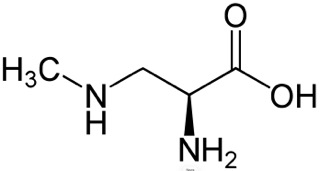
A classic case of etiology of disease is the incidence of ALS like symptoms in Guam among the local residents called Chamarro. During the Japanese occupation they were very malnourished and had diseases caused by malnutrition. In addition, they were forced to eat Cycad seeds which are toxic if not treated, but it is possible that during the second world war, they were eaten untreated and hence exposed to a toxin present called Beta – methylamino -L-alanine (BMAA). This is thought to be produced by the Cyanobacteria or other bacteria present in the nitrogen fixing roots of the plant. Interestingly, BMAA is only a methyl-amino substitution of alanine and is produced by multiple bacteria and present in a few plants. The locals when found by the military doctors were found to have high incidence of ALS-Parkinsons symptoms leading to the belief that eating this caused them to have ALS like symptoms. The locals also ate the flour that was made from seeds in which case the BMAA could have been associated with the proteins found in flour. The Chamarro were also known to eat the flying foxes which may exposed them to an additional BMAA since the flying foxes eat the cycad seeds which may end up concentrating the BMAA in the muscles of the bat-related species. When the locals were released from the low nutrition diet and, when they stopped getting exposed to BMAA through the Cycad seeds or flour – their nutrition improved and the ALS like disease incidence decreased.. It is possible that the low nutritional state also assisted in the incorporation of of BMAA into proteins or it became associated with the proteins in the low nutrition state. It is hypothesized that there is few decade delay between exposure and development of the disease.
This has led to a hypothesis that BMAA can be misincorporated into proteins in place of Serine and this BMAA loaded protein can either be modified differently or it can misfold into aggregates. It is possible that the loosely bound BMAA may also cause the protein to misfold or form aggregates. And once the aggregate has started accumulating then it may continue the aggregation process. It is possible that other degenerative disorders may also be related to the BMAA effect since many neurodegenerative disorders are characterized by protein aggregates.
If this is true, then once the aggregation process has begun, it may be possible to detect BMAA in the aggregated proteins. It is also possible that the BMAA like aggregation may be responsible for the slow modification of proteins that lead to their neurodegenerative effect though it is very likely that it is a slow process that affects neurodegenerative potential.