Food science – wasabi and snakes

It is amazing how much thought and science goes into producing food substances that we take for granted. The real wasabi owes its fiery nature to a volatile chemical called allyl isothiocyanate that binds to specific receptor in humans called TRPA1 – (Transient receptor potential) that is activated by heat in some instances. This allyl isothiocyanate is generated only transiently by the enzyme myrosinase acting on thioglucosides that are released when the cells of the plant rhizome is broken. This preparation of the plant may be critical since it is released only when the plant rhizome is ground up very finely. The allyl isothiocyanate lasts only transiently since the volatile component is lost very rapidly and is almost completely gone in 15 minutes. However, commercial wasabi may be prepared by other horse radish’s that are probably more long lasting.

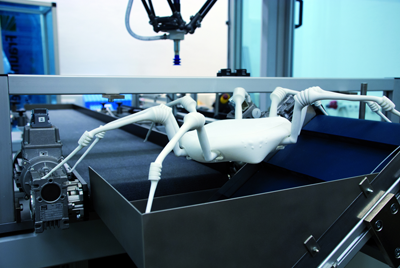
Interestingly, the same receptor that we use to sense wasabi is the same receptor that is used in snakes to sense heat. In pit-vipers the receptor is so sensitive that it can be used to measure the change in temperature of less that 0.009 C and may be like infrared vision in snakes allowing them to find their prey. This was discovered only recently in a publication in NATURE.

Similar Posts

  • Open source goodies

    Open source text search engine There are many technologies available that get slightly better packaged and then sold commercially. Often times the technologies are so superb and crowd sourced so well that it is surprising that many people do not consider it as a valid strategy for their laboratories or companies. Take the example of…

  • Chromosome transfer

    It is possible to transfer DNA from one cell to another but usually this is done by transfer of small regions of DNA and their transfer. However, larger pieces can be transferred as whole chromosomes that would add significant amount of DNA material. There are several steps involved such as creation of large sequences and…

  • Plant communication

    Plants communicate with each other. That much is known. However, what is not known is how plants communicate using symbiosis. Dr Johnson has reported new work in Ecology letters that shows that plants use symbiotic fungi to enable communication. Communication also causes interesting secretion by plants when infected by aphids. These secretions that are volatile…

  • |

    AI for drug discovery

    There are many companies that promise AI for drug discovery such as ChatGPT from OpenAI, Anthropic’s AI suite and Perplexity and there are more companies coming up too. One specific company that is unusual is that it seems to be promising much more deeper understanding of the drug discovery pathways then the others. It can…

  • | |

    Relaxin

    Relaxin is a 6kd 2 chain peptide hormone produced by ovary and placenta in females tha help remodel connective tissue but also promotes vasodilation and has cardioprotective and renoprotective effects in animal model via Nitric oxide pathway. Relaxin-2 signaling via GPCR RXFP1 has been investigated as a drug for its antifibrotic and vasodilatory actions. RXFP1…