Cancer treatment targeting through bacteria

Dr Claudia Gravekamp from the Albert Einstein College of Medicine is exploring the treatment of cancer with bacteria after she observed that the bacteria, Listeria monocytogenes, seemed to be concentrating near the area of tumor.

Tumor targeting of drugs or radiation is a very big issue. Currently, there are several drugs that attack cancer cells but they are also potent for normal cells. If the treatment can be targeted specifically towards the tumor cells then the treatment would be more effective. Dr Gravekamp intends to use the bacteria for targeting the tumor.

Typically, bacteria are rapidly cleared by the immune system. However, in cancer patients, the immune system appears to be suppressed around the area of the tumor and hence bacteria that would normally be cleared now can survive and divide in the region around the tumor. By labeling the bacteria with radioactive rhenium it is possible to irradiate the tumor with these targeting bacteria. Interestingly, these bacteria are not affected by rhenium but the cancer cells are killed by the radiation. Thus, it makes it possible to selectively irradiate tumor cells and kill them.

As a additional consequence, if the tumor cells change by the radiation, it is possible that they will lose their immuno-suppressive effect and thus be susceptible to the immune system. However, there are several unknowns – what is the consequence of having lethal bacteria in the body? Liver and Kidneys show toxicity from the processing of metabolites of the dead bacteria but also having these bacteria in circulation may cause other unknown effects in an immune-compromised cancer patient.
Similar Posts

  • | |

    Relaxin

    Relaxin is a 6kd 2 chain peptide hormone produced by ovary and placenta in females tha help remodel connective tissue but also promotes vasodilation and has cardioprotective and renoprotective effects in animal model via Nitric oxide pathway. Relaxin-2 signaling via GPCR RXFP1 has been investigated as a drug for its antifibrotic and vasodilatory actions. RXFP1…

  • Spider robot molded cheaply

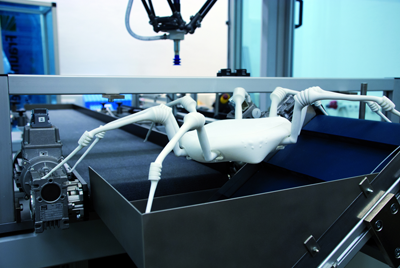
    Cheap robots by the millions Typically it costs many hundreds of dollars to make a robot that can do something substantial. However, researchers at the Fraunhofer institute have created molded or stamped robots that can be created very cheaply – they imagine them to be like disposable gloves. Make them, use them and then throw…

  • |

    Reinforcement learning

    Reinforcement learning is a method that drives learning and memory in primitive species such as birds, humans and other living species to its use in machine learning. It is used to influence the behavior of us humans on social media to its use to train machines. The essential components were initiated by BF Skinner 20th…

  • Biology games

    There have been many games that have been developed to enhance the understanding of biology and not many of them are good. However, when they work well – like this example from the Nobel prize foundation that is illustrated below – they illustrate the concept well. One wonders how many of these games illustrate all…

  • | | |

    Biotech companies

    Small Biotechs: Diagonal Tx: Clustering antibodies that mimic the action of the ligand and bypass the need for the ligand and receptor. This mutation that is created makes standard AI models not useful and so need a new method. This restores new ALK1 signaling in Hereditary Hemorrhagic Telangiectasia. It also treates LoF mutations in ALK1…