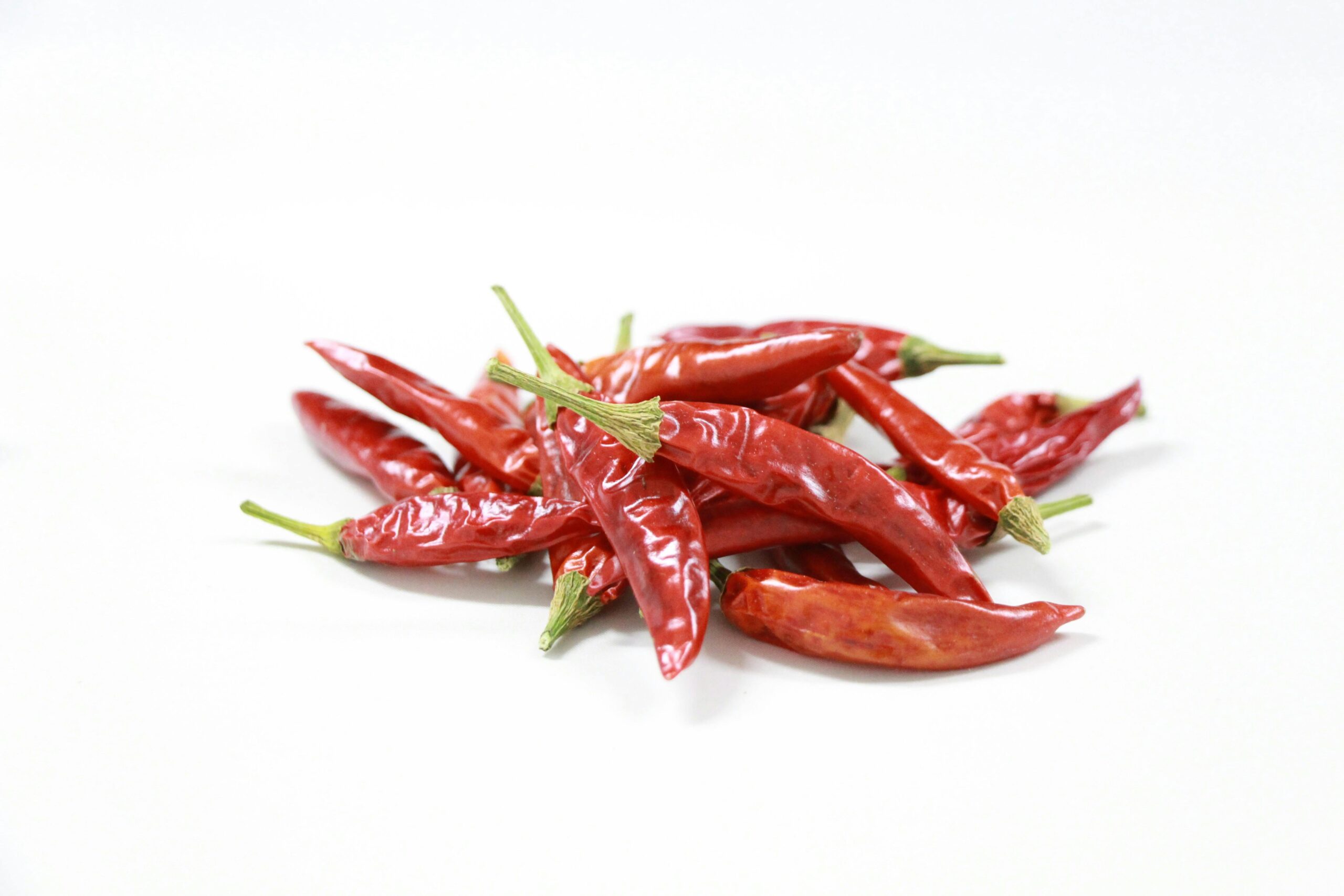
Capsaicin is the flavoring and key ingredient for the heat in chili peppers. The heat comes from its interaction with TRPV1 (vanilloid receptor subtype 1) ion channel that leads to the burning sensation in any animal tissue that comes into contact with it. Interestingly, bird TRPV1 is not responsive to capsaicin.
Another function that has not been investigated in more detail has been capsaicin’s interaction with mitochondrial complexes. Capsaicin interfers with CoQ1 in Complex 1 suppressing its activity. In cell lines, capsaicin mitochondrial disruption induces cell death, though inhibition of complex 1 and complex 3, incudes free radical generation. These anti cancer and pro-apoptotic effects may need more fundamental research.
The binding in low concentrations have been known to protect some oxygen deprived tissues such as cardiac tissues, it increases protection by increasing the expression of subunits of Complex 1 and Complex 3.
Lastly, capsaicin helps mitochondria by increasing the mitochondrial fission and causes upregulation of UCP (Uncoupling proteins) which encourages energy metabolism and fat oxidation.
Hence, depending on the cell type and context – capsaicin can have several beneficial effects.