
Protein function alters taste

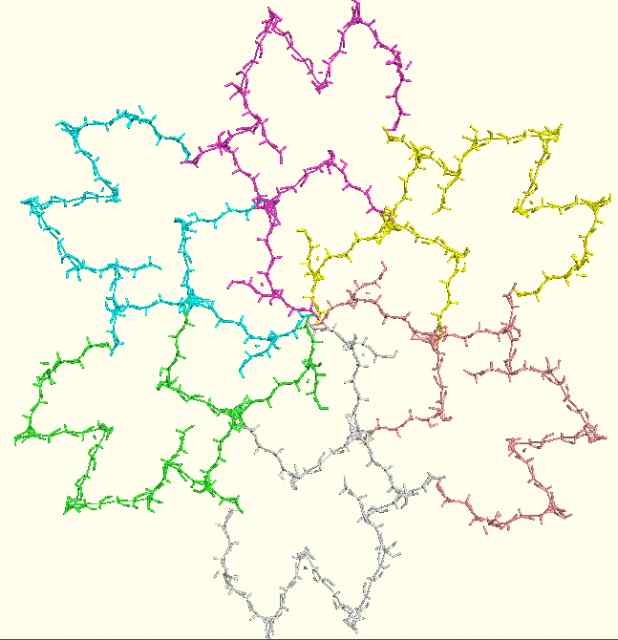
There have been many instances where we believe what we see or taste or hear. That belief forms our existence on what is “real”. Sometimes, when that distorts, it can change our perception. This is not about psychedelic substances but in fact a small protein called miraculin. It is 24.6 kDa protein that is a dimer or tetramer. This is found in a berry plant called “Synsepalum dulcificum” or Miracle fruit. They taste like cranberries but they can alter the taste of sour to taste like sweet. Miraculin binds to sweet receptor and acts as an antagonist but at low pH it changes to become a sweet receptor agonist. So while it is bound on the receptor almost everything acidic would taste sweet.

This could be used to make soda’s that taste sweet for diabetics or give them a taste of sweet without sugar.

So if you want to make lemonade when life gives you lemons try “flavor-tripping” or perhaps enjoy cheese as cheese-cake.

This protein has been cloned into lettuce and tomato, so imagine eating differently tasting vegetables and increasing the salad repertoire.

If our receptors can be fooled by a small protein, wondering what other receptors in our gastrointestinal system also change our perception and digestion?

See the protein here: https://www.rcsb.org/structure/3IIR

Similar Posts

  • Polyphenols

    Polyphenols are a large family of naturally occurring compounds found in plants with two or more aromatic rings bearing one or more OH groups. They are divided into four main subclasses: Flavonoids : Quercetin (onions), catechin (tea), anthocyanins and kaempferol (Onions, berries, tea, dark chocolate) Phenolic acids: Caffeic acid, ferulic acid, ellagic acid, chlorogenic acid…

  • Games can help science – Foldit

    People spend a significant amount of time playing games and solving puzzles. It has always been argued that there must be some benefit that could be derived from the endeavors. Many man-hours, computer computation and power go into playing games. Obviously, they serve some physiological and psychological functions since so many people continue playing games….

  • | |

    Relaxin

    Relaxin is a 6kd 2 chain peptide hormone produced by ovary and placenta in females tha help remodel connective tissue but also promotes vasodilation and has cardioprotective and renoprotective effects in animal model via Nitric oxide pathway. Relaxin-2 signaling via GPCR RXFP1 has been investigated as a drug for its antifibrotic and vasodilatory actions. RXFP1…

  • | |

    TDP43

    TDP43 (a nuclear DNA-RNA binding protein) is involved in splicing, RNA transport and stability in neurons. It was first identified as a pyrimidine rich TAR DNA sequence in HIV type 1 gene to modulate HIV gene expression. In 95% of the ALS patients, TDP43 is abnormal located within the cell and may also be aggregated,…