Chemical Heritage Foundation – a resource for scientists and technologists

Many visitors come to Philadelphia to learn about American history and make a compulsory stop to see the Liberty Bell.
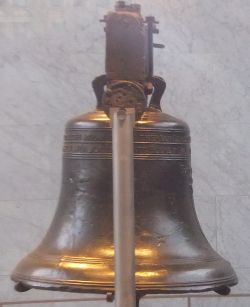
2013-04-05-Liberty bell in Philadelphia

However, what is relatively unknown to most of them is that there is a great chemical technology library, museum and a center for scholars less than three blocks away called the Chemical Heritage Foundation.
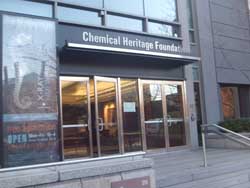
2013-04-05-Chemical Heritage Foundation

There are different kinds of technologies but there is a significant amount of history involved in development of the technologies. Unfortunately, most of it is not captured very well. However, there is Chemical Heritage Foundation, headed by Dr. Thomas Tritton, which is doing a fantastic job in education of chemists, display of instrumentation, and a great archival resource for scientists. They have educational resources for chemists as well as historians and superb collections of instrumentations that are unique. They host multiple meetings to encourage scientists but also serve as a great location for any scientific meetings.

What is not known much is their rare book collection. Dr. Ron Brashear, Arnold Thackeray Director of the Othmer Library has been managing a superb collection of rare books that are as useful to scientists as they are to collectors. For scientists, they provide perspectives into science that were not known before. While there, do make it a point to see “Philosophiæ Naturalis Principia Mathematica” by Isaac Newton that changed the course of history.
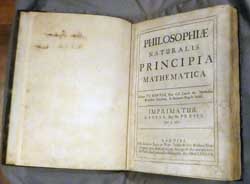
2013-04-04-Newtons book Philosophie naturalis principia mathematica

Also, some of the collections of early Gutenberg publishing day’s books are a treat and the illustrations are remarkable.
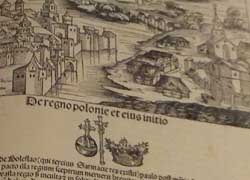
2013-04-05-CHF Illustration from rare books

For example, this drawing is one of a series that shows the start of civilization.
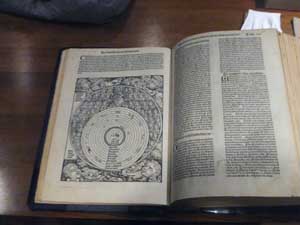
2013-04-05-CHF Illustration from rare books creation of earth

And here is a journal of University of Bombay journal from the early 20th century before the world war’s that can still be seen in the collection.
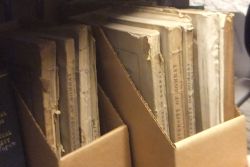
2013-04-05-CHF University of Bombay Journal

Chemical Heritage Foundation is not just a repository. They recently hosted the American Chemical Society’s Entrepreneurship series on March 27-28, 2013, attended by Dr. Anil Tarachandani of Usin’Life that highlighted their role in bringing innovation to the market.

When you are at Philadelphia next, visit the Chemical Heritage Foundation and learn something new!


Similar Posts

  • |

    Knowledge graphs

    Knowledge graph is a way of representing information where entities/nodes (people, places, products, concepts) are linked by relationships/edges (works, creates, has ). It is a semantic network that captures facts and context. There is also an ontology that defines different types of node/edges and defines what types exist and how they relate. These are used…

  • Discoveries and Publicity

    A university in Netherlands, Eindhoven institute of technology discovered a protein that is a variety of luciferase that generates light based on the concentration of the analyte. They also modified it so that another protein that is integrated to the same protein converts the light that is emitted to another color based on the binding…

  • Technology for ALS

    The Prize4Life foundation is hosting a hackathon and to help people prepare it has written out specifications very clearly. 1. Emergency communication: Refining the Microsoft GazeSpeak application Creating a faster way for communicating a few words in emergency situations Improving the alarm system activating in case of Bipap failure 2. Speech devices: Building a dual…

  • Aquaporin

    Aquaporin is a protein that is a water channel in cell membranes. One company with the same name is using the protein in artificial membranes to extract the water. In typical reverse osmosis process, the water is pumped at a high pressure on one side of the membrane and that pushes the relatively free water…

  • Time technology

    Currently the line of thinking is that technology is complex and we need to complex instrumentation and thoughtful experiments over a long period of time before a new technology is created. However, consider time. We take for granted that the clock divides the day into 60 minutes, with 60 seconds per minute and 24 hours…