Installing components for an AI system: docker

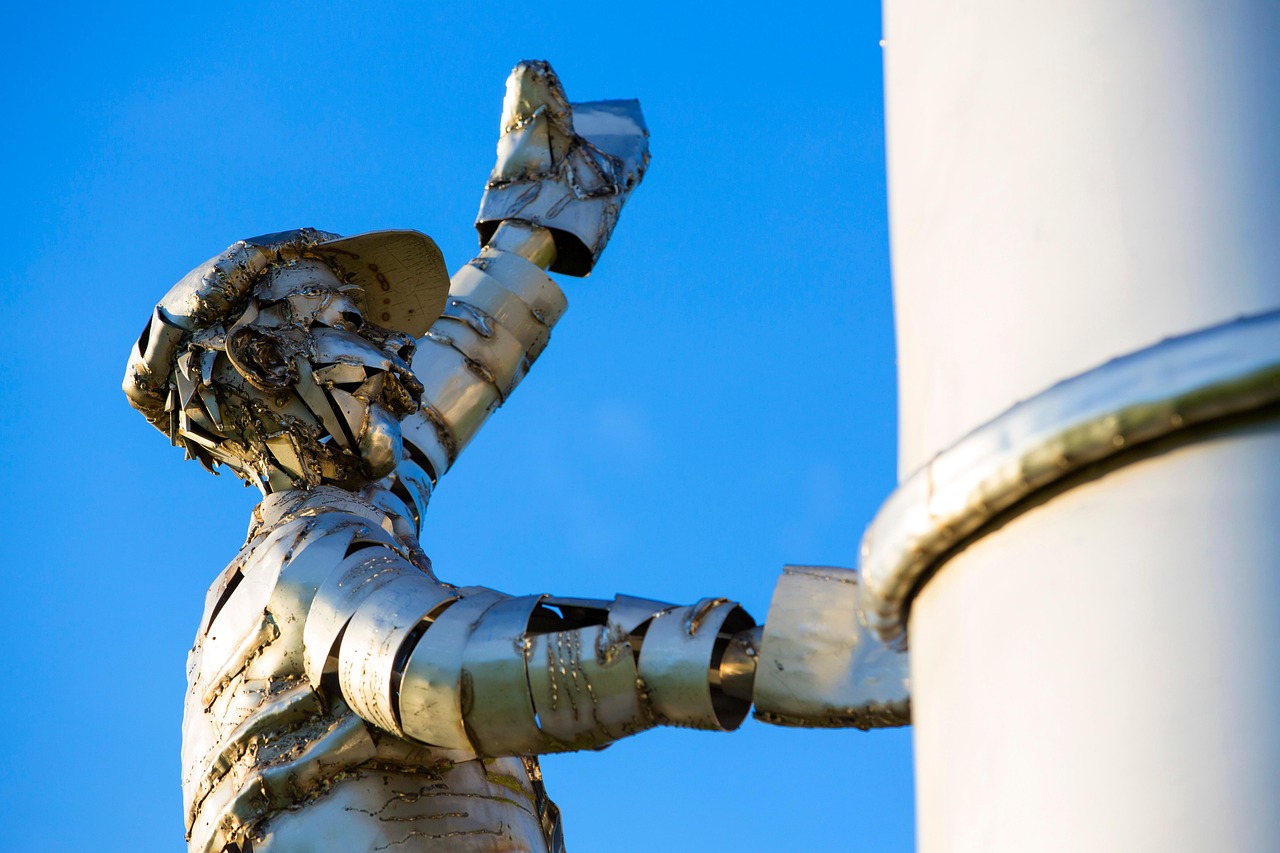
statue, sculpture, iron, steel, docker, finland, hamina, docker, docker, docker, docker, docker, finland

There are many components that go into making an AI system in a home-lab system. One major component is Docker. For those who do not know it, this enables running a virtual system within the operating system that is currently running on the hardware. What makes Docker powerful is that it abstracts away most of the hardware components and allows use of resources. Another feature it enables is portability. It is possible to move the docker container (defined as a lightweight, standalone, executable package of software that includes everything needed to run an application) from one machine to another and still execute the application.

There are good instructions for setting this up. One that I found specifically useful was this one.

https://www.digitalocean.com/community/tutorials/how-to-install-and-use-docker-on-ubuntu-22-04

Docker is a wonderful container to many applications and here are some common commands that a user should know:

Common Commands:

  run         Create and run a new container from an image

  exec        Execute a command in a running container

  ps          List containers

  build       Build an image from a Dockerfile

  bake        Build from a file

  pull        Download an image from a registry

  push        Upload an image to a registry

  images      List images

  login       Authenticate to a registry

  logout      Log out from a registry

  search      Search Docker Hub for images

  version     Show the Docker version information

  info        Display system-wide information
Similar Posts

  • Sparql tool – connect LLM to knowledge graphs

    Talk to knowledge graph – sparql-tool Use LLM.: Hallucinations (sometimes good for creativity), Outdated knowledge, no access to your data ( trained on public knowledge). Solutions: Fine tuning – retrain the model on domain data RAG – Search: look things up in real time. Claude code looks at searched doc. Vector embeddings: semantic similarity search…

  • |

    Virtual cell

    Hani Goodrazi – Arc institute has been working on virtual cell. Drugs fail due to overfit experimental models, You need screen drugs with better models of human biology. Geneva is platfrom that brings tumor models into perturbation model – that is a transcriptomics assay that deconvolves into effect. Take multiple cell line and then treat…

  • |

    AI for drug discovery

    There are many companies that promise AI for drug discovery such as ChatGPT from OpenAI, Anthropic’s AI suite and Perplexity and there are more companies coming up too. One specific company that is unusual is that it seems to be promising much more deeper understanding of the drug discovery pathways then the others. It can…

  • |

    Open source protein models

    A company called Profluent (profluent.bio) has been developing protein models that can be used for designing new proteins (https://www.nature.com/articles/s41587-022-01618-2), modeling of new CRISPR-Cas sequences (https://www.nature.com/articles/s41586-025-09298-z) and developing LLM for protein generation (https://www.biorxiv.org/content/10.1101/2025.11.12.688125v1.article-info). What is amazing is that they have open sourced all their models and Profluent-E1 is available in GitHub to download and use. (https://github.com/Profluent-AI/E1)…

  • Text from Image

    Starting with a base image, it is possible to generate a description. An AI (Qwen-3-VL) simple description : This is a simple, hand-drawn black-and-white sketch of a person’s upper body. Here’s a breakdown of the key elements: Hair: Long, flowing hair depicted with two smooth, curved lines extending from the top of the head down…